Poul Henningsen PH 5/3 Pendant – “Pat. Appl.” 1926–1927
$13,222.46
POUL HENNINGSEN (Denmark, 1894 - 1967).
Pendant lamp PH 5/3. 1926.
Measurements: 28 cm (height); 50 cm (diameter).
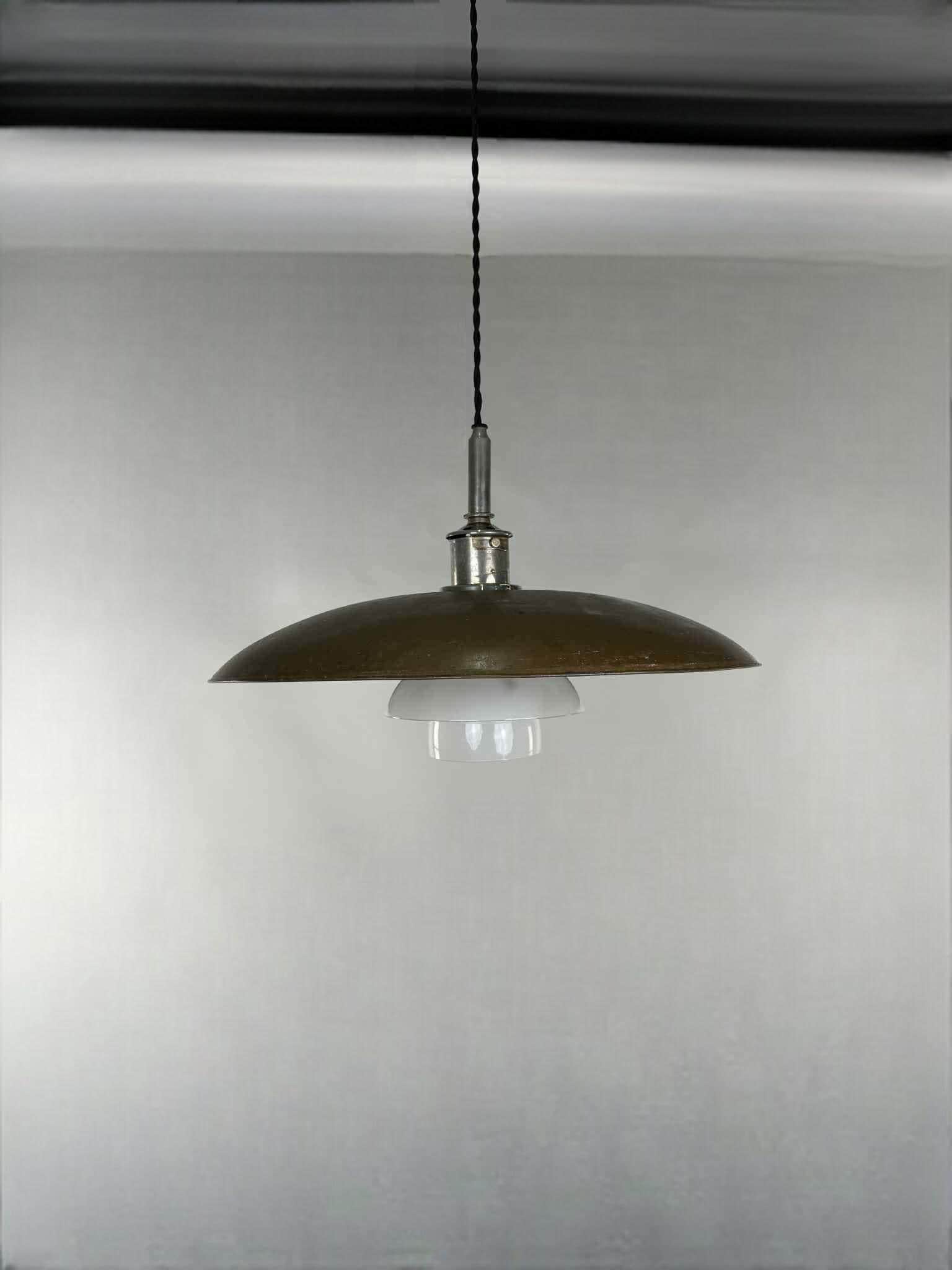
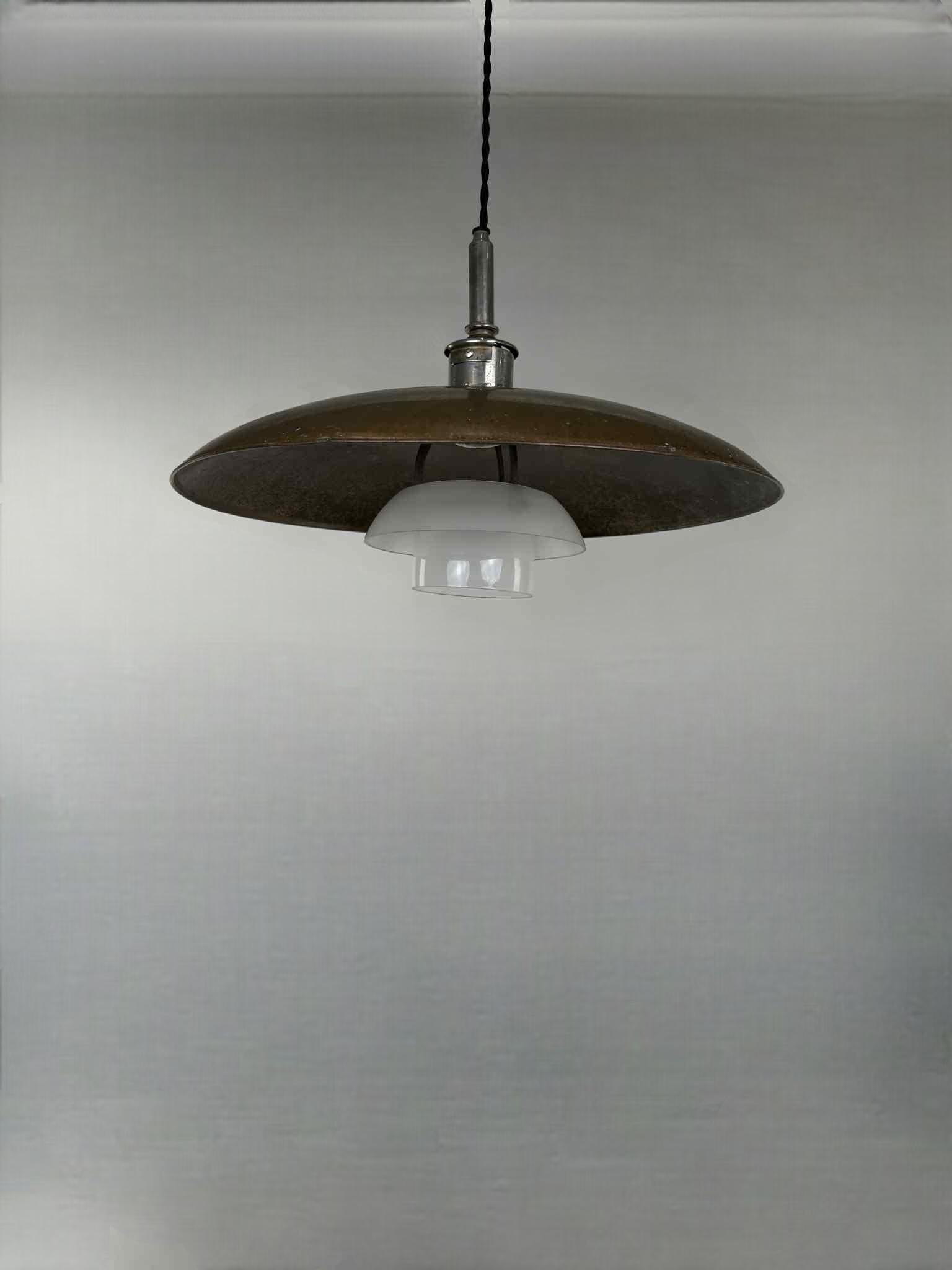
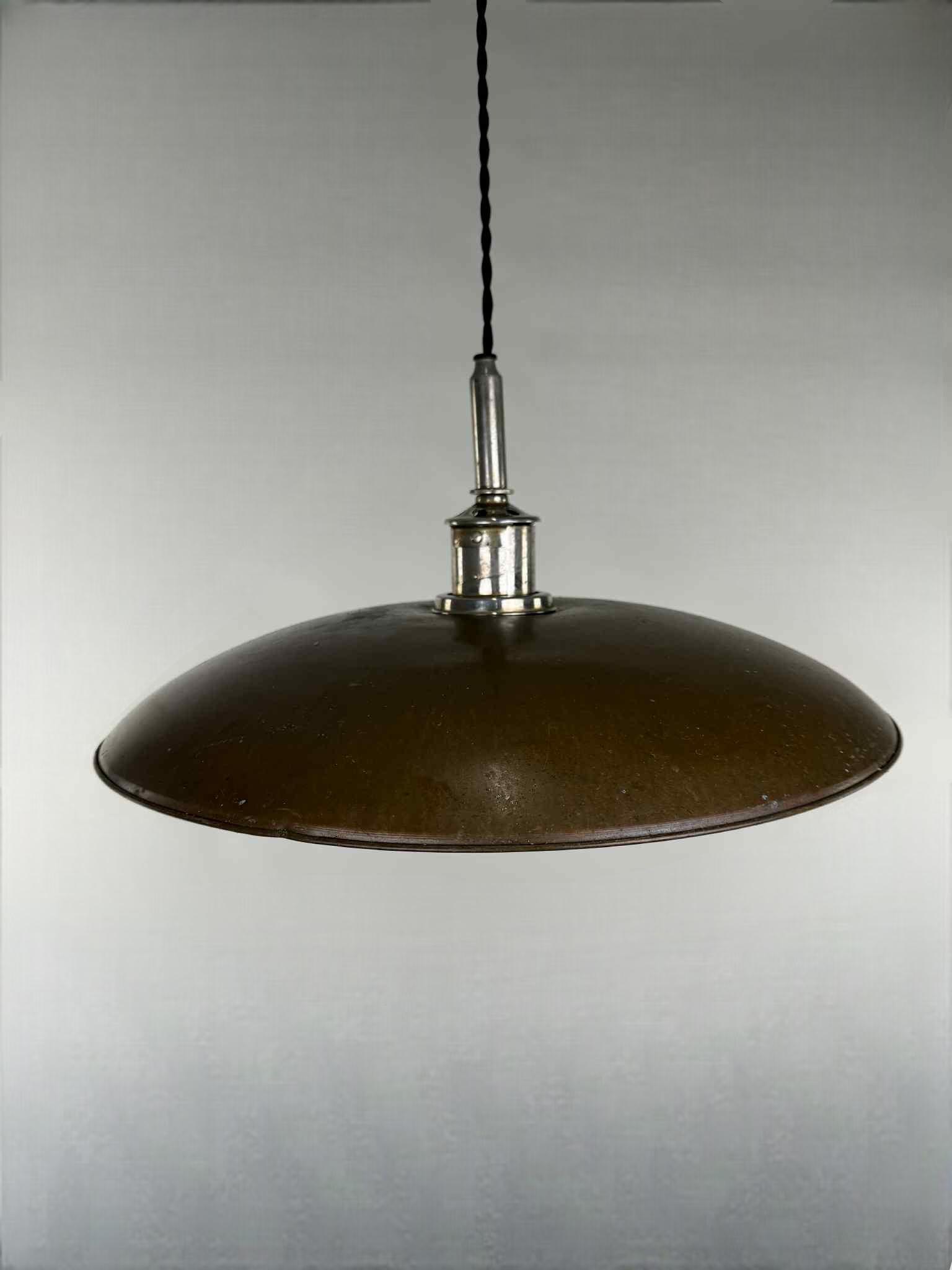
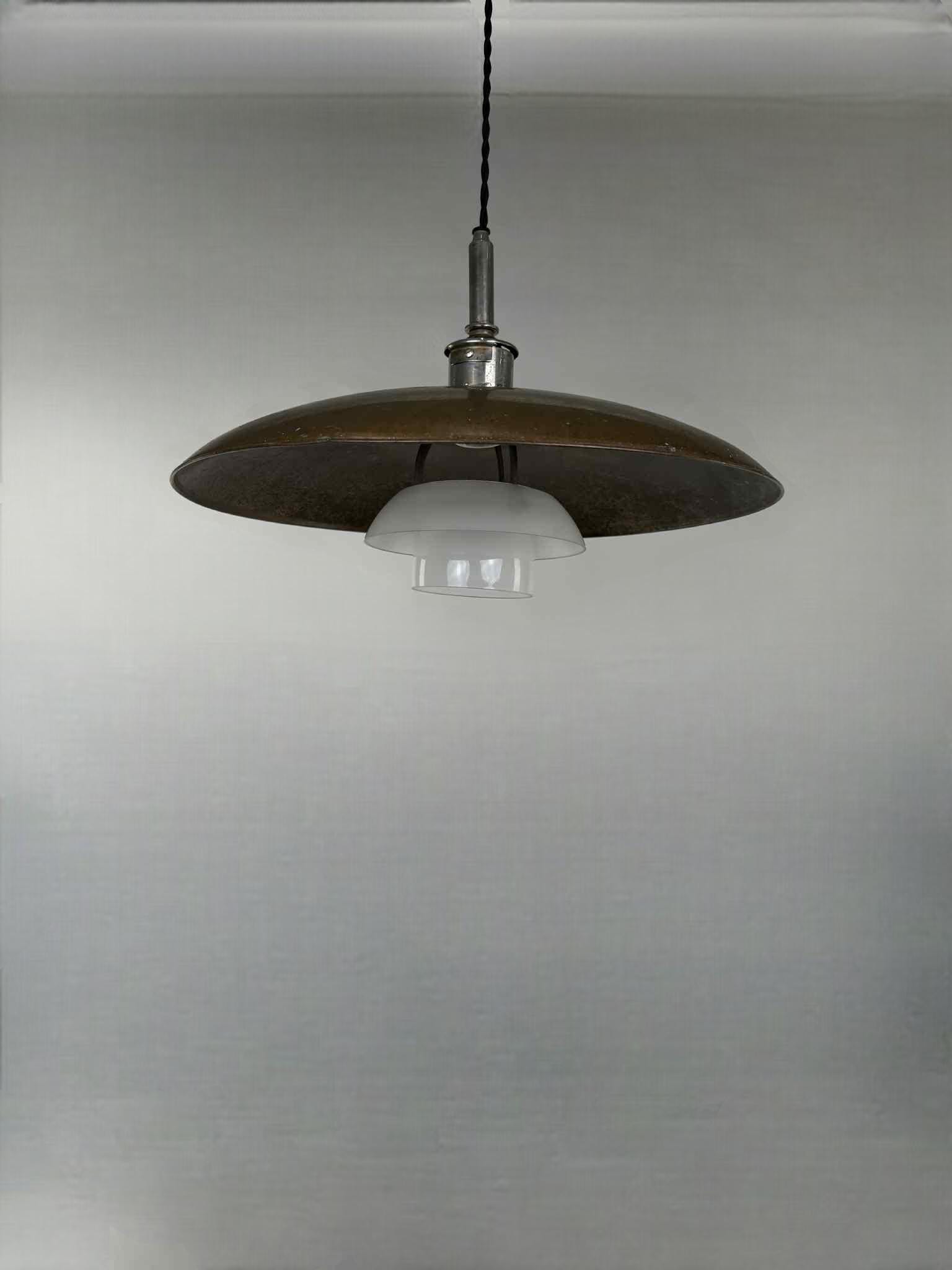
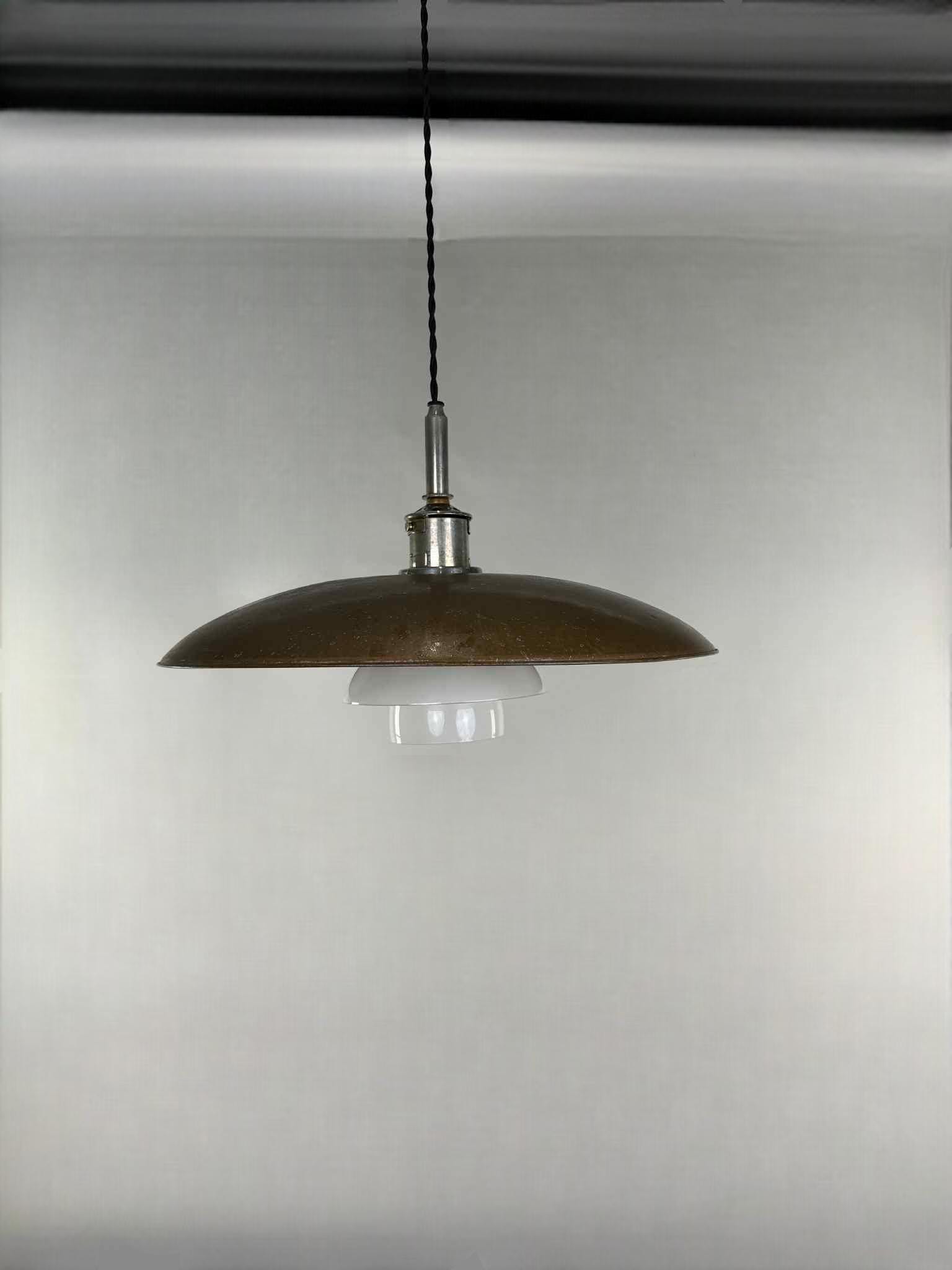
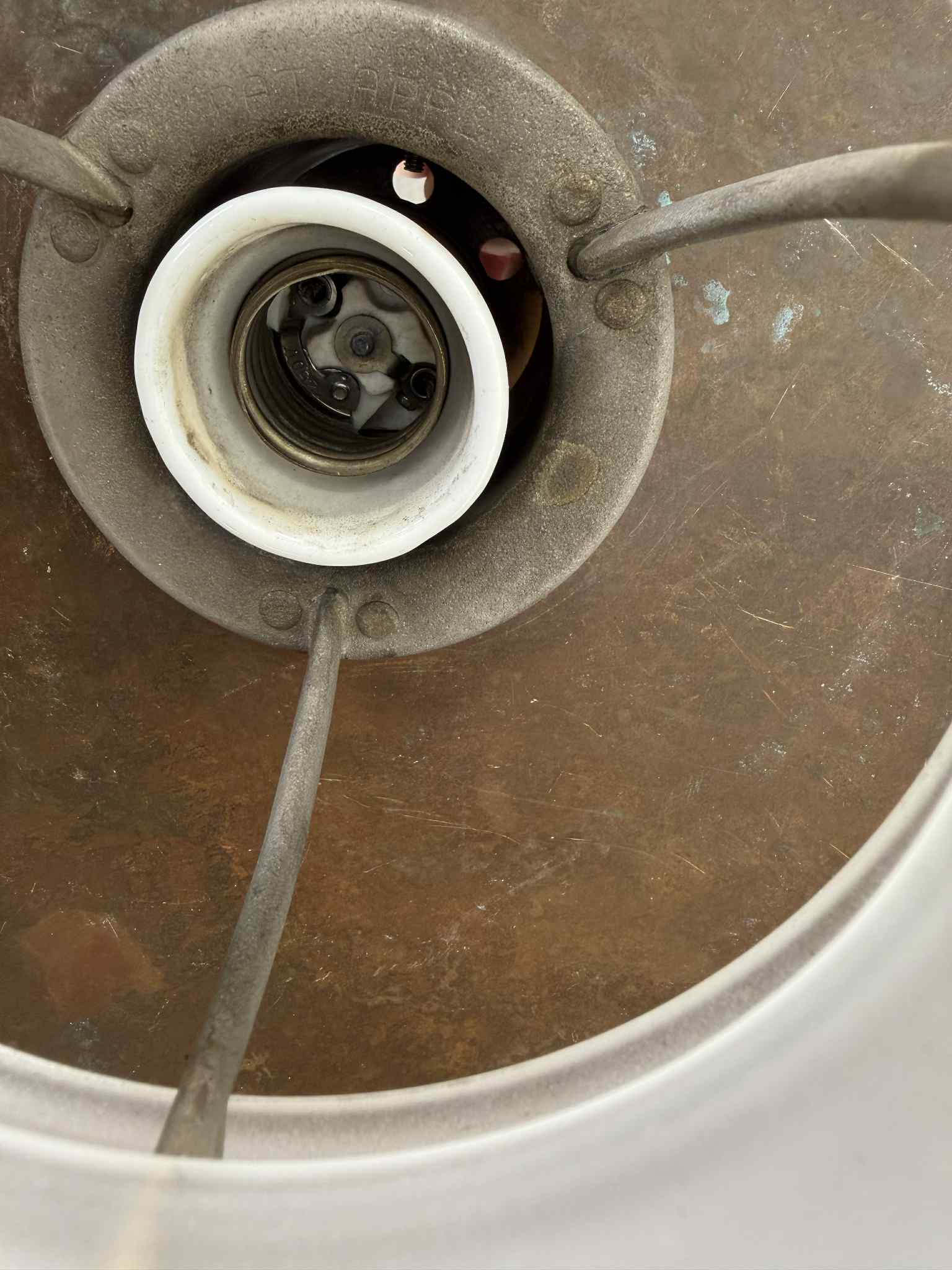
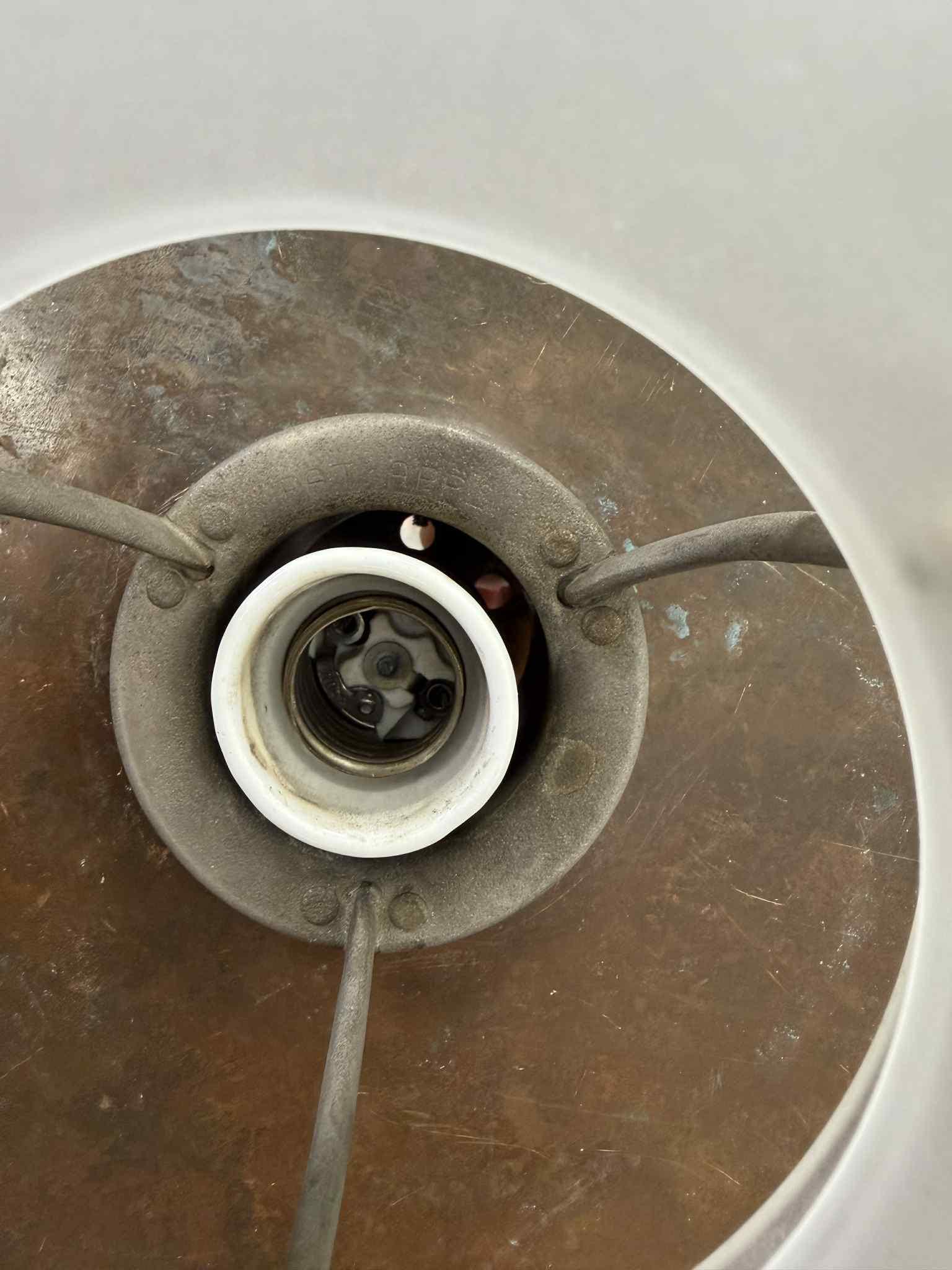
Rare and early PH 5/3 pendant by Poul Henningsen, marked “Pat. Appl.”, dating from 1926–1927.
Executed with copper top shade, mat glass under and a nickel-plated shade holder, this model represents one of Henningsen’s first developments of the multi-shade lighting system that became a cornerstone of Danish design.
Belonging to Poul Henningsen's iconic PH series (started in 1926), the PH 5/3 lamp is a representative "hybrid" model. Its design is based on a scientifically modeled three-shade reflector system (following the lituus curve), which aims to provide a controlled, soft and glare-free light distribution, optimized for low-hanging on tables.
Henningsen established that the electric light source should be concealed to avoid direct glare. To achieve this, he developed a system of concentric shades that distribute the light in a controlled manner by reflection.
The screens are designed following the mathematical "lituus" curve or logarithmic spiral, so that the distance from each surface to the light source is calculated to determine the balance between direct and diffuse reflection. The result is a light that illuminates comfortably, without casting harsh shadows or visual discomfort, making the PH 5/3 an ideal lamp as an elegant ambient spotlight.
Danish designer, architect and critic, Poul Henningsen was one of the key figures in Danish cultural life in the interwar period. He studied architecture between 1911 and 1917, but never graduated, as he decided to become an inventor and painter. Nevertheless, he worked as an architect and became one of the most prominent advocates of functionalism. In his career as a designer, his most famous creation was the "PH Artichoke" lamp, a simple lamp that used hallmarks of light to avoid glare and create an aesthetic effect of great beauty. Its success enabled Henningsen to finance his later work. He is currently representing at the Danish Museum of Art and Design, the MoMA in New York and the Victoria & Albert in London, among many others.
0 items in your cart